
Available courses

Communicative English - II
Sensor Technology
Electronic Measurements
Microprocessor and Microcontroller
Analog Circuits
Semiconductor Devices and Circuits
Embedded Systems
Introduction to Solid Mechanics
Elements of Geoinformatics
Engineering Economics, Estimation & Costing
Earthquake Engineering
Introduction to Data Science
Development of Education in India
English Language Teaching
Culinary & Baking Skills
Introduction to Vascular Plants
Morphology and Anatomy of Angiosperms
Organizational Psychology
Peace Education and Conflict Management
North-East Indian Literature in English
British Literature : 18th-19th Century
Eastern Approaches to Psychology
Public Finance
Biopsychology
Comparative Public Administration
Real and Complex Analysis
Human Rights Education
International Economics
Gender Economics
Media Laws and Ethics
Intermediate Macroeconomics
Electronic circuit, Network and Devices
Statistics in Psychological Research
Refugees and International Conflicts
Principles of Genetics
Energy and Environment
Gardening and Nursery Management
Introduction to New Media
Perspectives in Ecology
Modern Indian History
British Literature: 19th-21st Century
Bio- psychology
Addiction and Trauma Counselling
Psychological Assessment-II
Teaching Learning Methods and Pedagogy
Plant Genetics
Animal Diversity II
Public Relations and Corporate Communications
Fundamentals of Econometrics
Introduction to Organisational Behaviour
Organisational Behaviour
Management of Industrial Relations
Investment Analysis and Portfolio Management
Digital Marketing
Financial Markets & Institutions
Corporate & Business Law
Business Policy & Strategic Management
International Marketing
Fundamentals of Investment
Business Mathematics and Statistics for Decision Making
Consumer Behaviour
Fundamentals of Financial Management
Business Statistics in Decision Making
Micro Economics Theory & Practice
Financial Management Theory & Application
Tax Filing & E-Return
Taxation Law and Practices
Financial Management
Auditing and Corporate Governance
Investment in Stock Market
Quantitative Techniques for Business
Cost and Management Accounting
Human Resource Management
Business Statistics
Network Security
Android Application Development Fundamentals
Cloud Computing
Basics of Web Designing
Relational Database Management Systems
Computer Organization and Architecture
Object-Oriented Programming using Java
Operating Systems
Web Technologies
Mathematical Foundation of Computer Science II
Blockchain Fundamentals
Applied Thermodynamics
Measurements and Metrology
Production and Operation Management
Advanced Mechanics of Solids
Fluid Machines
Strength of Materials
Engineering Materials & Applications
Kinematics and Theory of Machines
Electric Machines - II
Digital Signal Processing
Digital Electronics
Power Electronics
Electromagnetic Fields
Control Systems
Surveying & Geomatics
Geotechnical Engineering
Structural Analysis
Transportation Engineering
Hydraulic Engineering
Construction Engineering & Management
Computer Organization & Architecture
Advanced Programming
Design and Analysis of Algorithms
Discrete Mathematics
Operating System
Theory of computation Ecosystems
Power Electronics and its Applications
Deep Learning
Software Engineering
Theory of Computation
Engineering Physics
Mathematics II
Mathematics-II
Basic Electrical Engineering
Data Structures
Object Oriented Programming
Discrete Mathematical Structures
Modern Computer Architecture
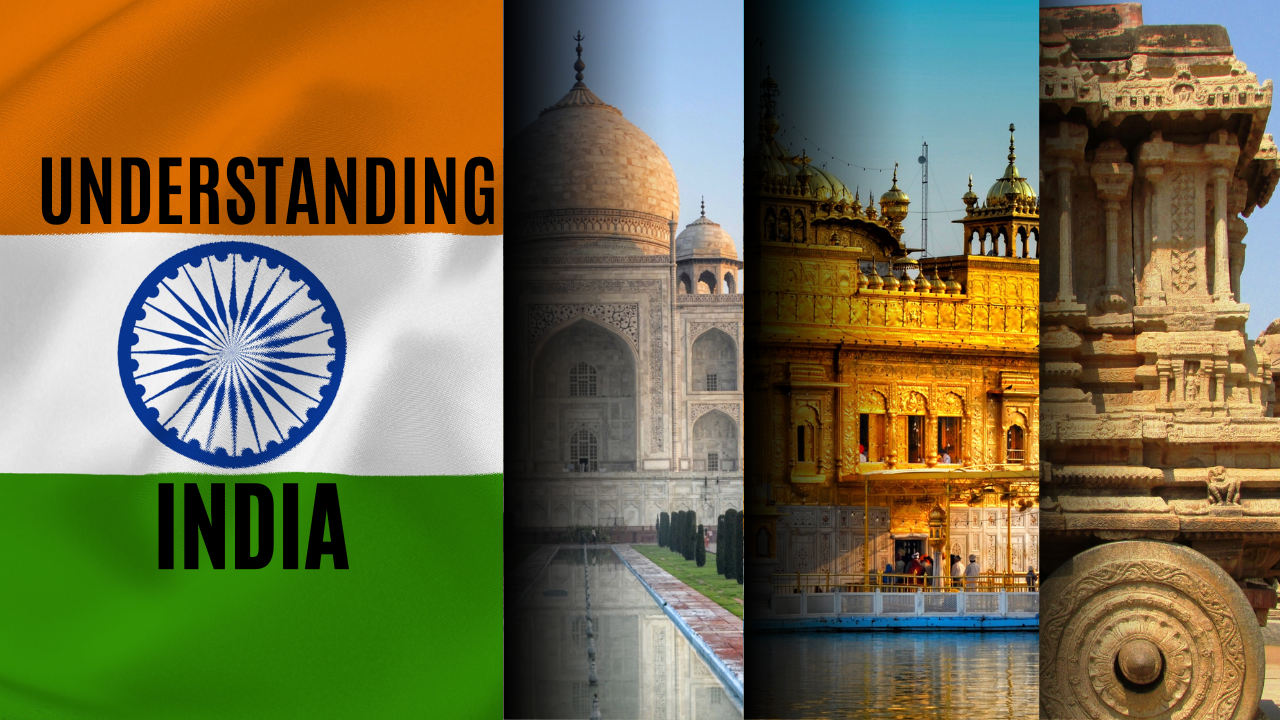
Understanding India (2026 Spring)
Environmental Studies (2026 Spring)
Language Communication (2026 Spring)
Service Learning – Tapesia (2026 Spring)
Service Learning – Azara (2026 Spring)
Essence of Indian Traditional Knowledge (2026 Spring)
The Design Thinking and Idea Lab serves as a hub for creativity, innovation, and problem-solving

The Course Introduction to Culture, Religion and Identity of North East India is a 4 credit course offered to the research scholars of North East India Studies under Public Administration.  This Subject Specific Course is part of the PhD Course Work which every research scholar has to complete.  Successful completion of the course is mandatory for the completion of the PhD Course work.

Teachers:

Dr. Chandrima Das

Dr. Jose Palely (Teacher & Coordinator)


This Course is offered to Research Scholars as Subject Specific Module of the PhD Course Work.  This course has 4 modules and 3 assignments.  Successful completion of the course is a requirement for completion of the PhD Course Work. The Course will begin on 5th June 2023 and will complete by 22 August 2023.  

Teachers:

Dr. Zacharias Tirkey

Dr. Saurabh Chandra

Dr. Pankaj Kumar Kalita

Coordinator:

Dr. Jose Palely

"Understanding India" aims to equip students with a holistic perspective, enabling them to navigate and comprehend the intricate dynamics that shape the nation. Through a combination of theoretical knowledge, practical insights, and critical thinking exercises, participants will emerge with a well-rounded understanding of India's societal, cultural, political, and economic intricacies.


Understanding India is a comprehensive course designed to introduce students to the rich cultural, historical, social, political, and economic landscape of India. India, with its vast diversity, complex societal structure, and rapid transformation, has become one of the most influential countries in the world. This course aims to provide students with an in-depth understanding of the key aspects that shape India’s identity and its role in the global context.